The Internet's First Word Was an Accident
The plan was to type LOGIN. The system crashed after two letters, and the internet's first message became "LO" instead.
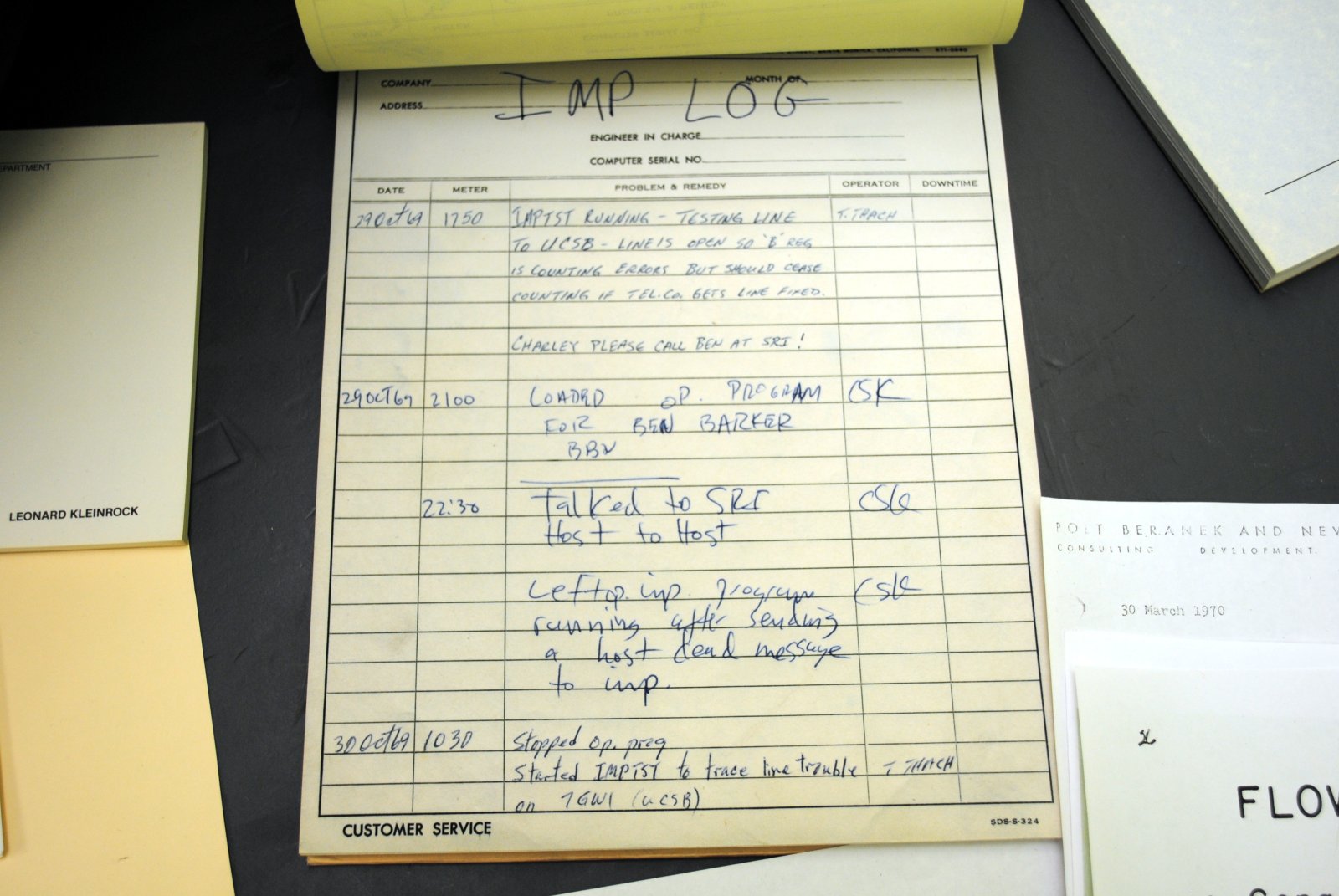
Photo: fastlizard4 / Flickr — CC BY-SA 2.0
On October 29, 1969, a UCLA student named Charley Kline sat down at a terminal to send the first message over ARPANET — the Department of Defense-funded network that would eventually grow into the internet — to a computer at Stanford Research Institute.
The plan was simple: type "LOGIN" to remote-connect to the Stanford machine, one letter at a time, with a researcher on the phone at the other end confirming each character arrived. Kline typed L. It arrived. He typed O. It arrived. He typed G — and the Stanford system crashed. It was about 10:30 at night, Pacific time.
So the first message ever transmitted over what would become the internet was, unintentionally, just "LO" — as good as "lo and behold," if you're inclined to read poetry into a system crash. The full connection was re-established about an hour later, and "LOGIN" went through properly the second time.
ARPANET itself had started as a practical solution to an expensive problem: research universities each had powerful, incompatible computers, and letting them share processing time and data over a network was a practical way to get more out of expensive machines. Bob Taylor started the project at ARPA in 1966, and Larry Roberts joined as program manager in January 1967, drawing on packet-switching ideas from Donald Davies and Paul Baran. In January 1969 the contract to build the network's routers, called Interface Message Processors, went to Bolt Beranek & Newman. Each IMP was a ruggedized Honeywell DDP-516 with just 24 kilobytes of core memory.
By 1969 it connected exactly four nodes — UCLA, Stanford, UC Santa Barbara, and the University of Utah — and all four were running by December 5. It grew steadily: nine IMPs by June 1970, and 213 host computers by 1981. In 1971 Ray Tomlinson of BBN sent the first network email, and on January 1, 1983 the network switched over to TCP/IP, the protocols the internet still runs on. ARPANET was formally shut down in 1990. It would be decades before "the internet" meant anything to anyone outside a small circle of researchers.