Spotlight: The Twilight Zone (1959–1964)
Rod Serling used aliens and time travel to say things about 1960s America that network censors wouldn't let him say directly.
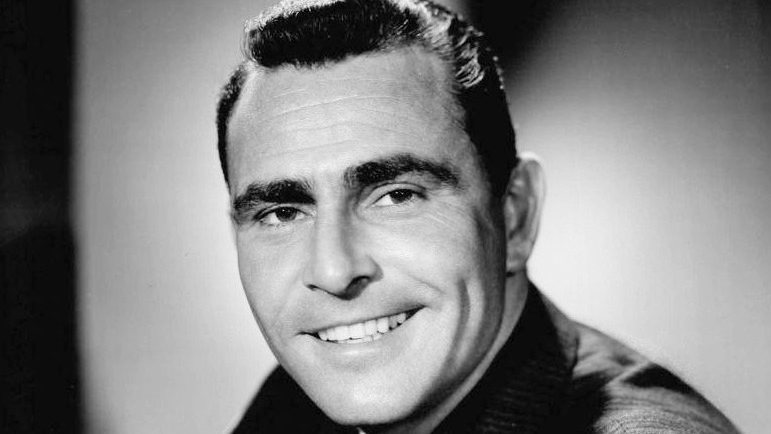
Photo: CBS Television, 1959 — public domain
Rod Serling had already had scripts gutted by network censors and nervous sponsors — a drama based on a real murder was rewritten until it barely resembled the event it was based on. His solution was The Twilight Zone: if a story was set on an alien planet or fifty years in the future, the story goes, network standards departments stopped asking what it was "really" about.
That's how a show ostensibly about monsters and time travel became one of the most pointed political dramas of its decade. "The Monsters Are Due on Maple Street" is a half-hour about a suburban block descending into paranoid mob violence over a power outage — a story often read as being about McCarthyism, with no mention of McCarthy. "Eye of the Beholder" is a meditation on conformity and beauty standards that saves its twist for the final shot. And "To Serve Man" turns a first-contact story about benevolent aliens into one of the most quoted gut-punch endings in TV history — it's a cookbook.
The show premiered on CBS on October 2, 1959. Serling wrote 92 of its 156 episodes himself, opening most of them in person, cigarette in hand, in a clipped delivery that's been parodied for six decades since. It ran five seasons, though not in one go: CBS cancelled it in 1962, revived it in January 1963, and it ended for good in 1964.
The writing earned it prizes at the time. It won Emmys for outstanding writing in drama in 1960 and 1961, and the Hugo Award for Best Dramatic Presentation three years running, from 1960 to 1962. That was a record until Doctor Who tied it in 2008.
It was also a proving ground for actors who were about to become famous. Robert Redford, William Shatner, Leonard Nimoy, Burt Reynolds, Ron Howard and Robert Duvall all turned up in its episodes. Its anthology format, one new self-contained story every week, has been revived, referenced, or imitated by nearly every genre show that came after it, and the title itself has returned three times, in 1985, 2002 and 2019.