The Art of the Stalk: Looking Back at John Carpenter’s Halloween
A $300,000 independent film, a camera that prowled, a piano tune in an odd rhythm and a phrase coined by a professor: how John Carpenter's Halloween set the pattern for the slasher.
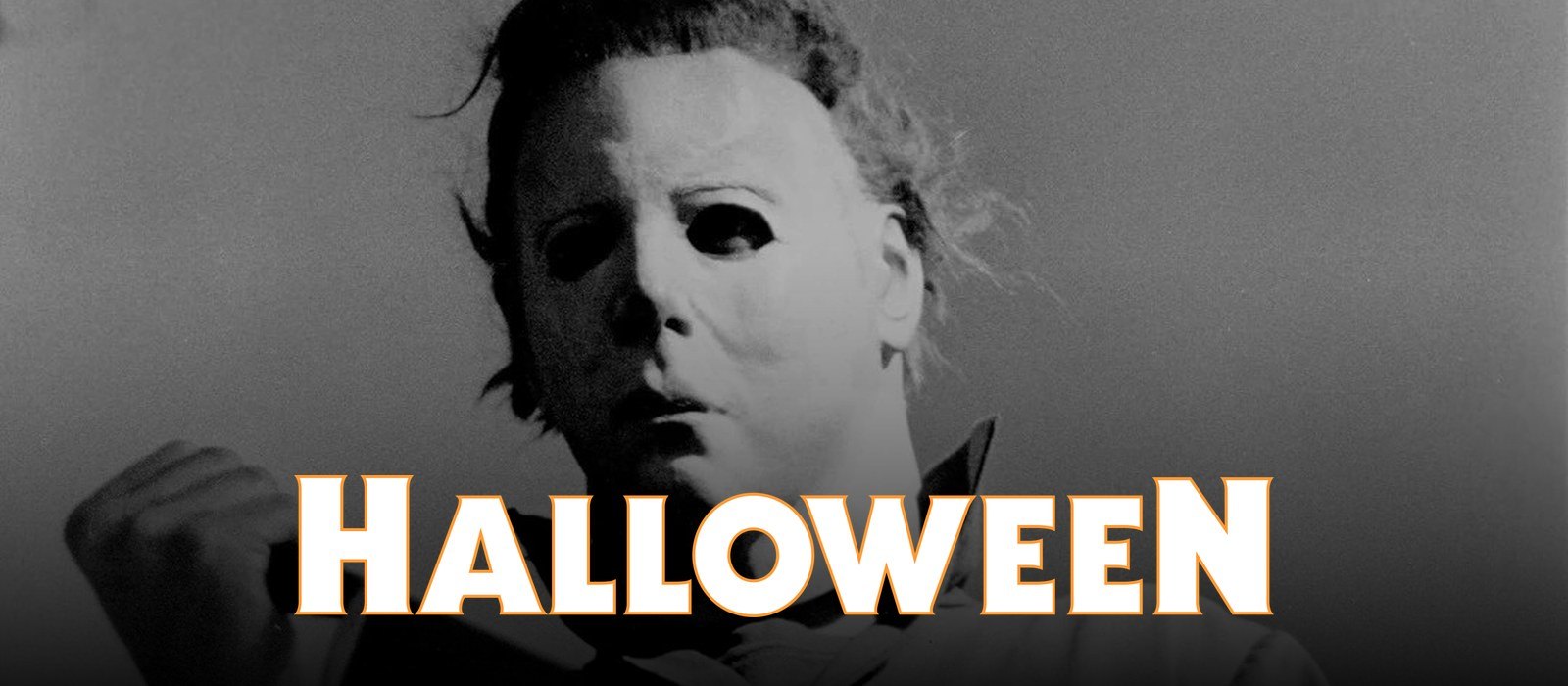
Still: publicity photo for Halloween (1978), unknown photographer, via Wikimedia Commons — public domain. Logo: Compass International Pictures, via Wikimedia Commons — public domain as a text logo (the name may be a trademark). Composite: The Nerd Net.
It's a Halloween story with a catch: the film that gave horror its most copied shape was made in 20 days on a shoestring, by a director who also wrote the music himself. John Carpenter's Halloween arrived in October 1978 and, for better and worse, horror was never quite the same.
The small film that wasn't small. Producer Irwin Yablans and financier Moustapha Akkad hired Carpenter after seeing his Assault on Precinct 13, and wanted a film about a killer stalking babysitters. Carpenter co-wrote it with Debra Hill, who also produced. The budget was around $300,000, though sources round it up to $325,000, and filming took 20 days over four weeks in May 1978. The film grossed about $47 million in the US and Canada and some $70 million worldwide, which made it one of the most successful independent films ever made. It opened in Kansas City in late October 1978 (sources differ by a day or two on the exact date) and spread from there.
The camera that prowled. The opening is a long single take from the killer's point of view, creeping around a house and up the stairs. Much of the film was shot with a Panaglide, a rig described as a clone of the then-new Steadicam, which let a camera float rather than rattle along on rails. The idea that a shot could be the killer, looking, waiting and choosing, became one of the genre's most reused devices.
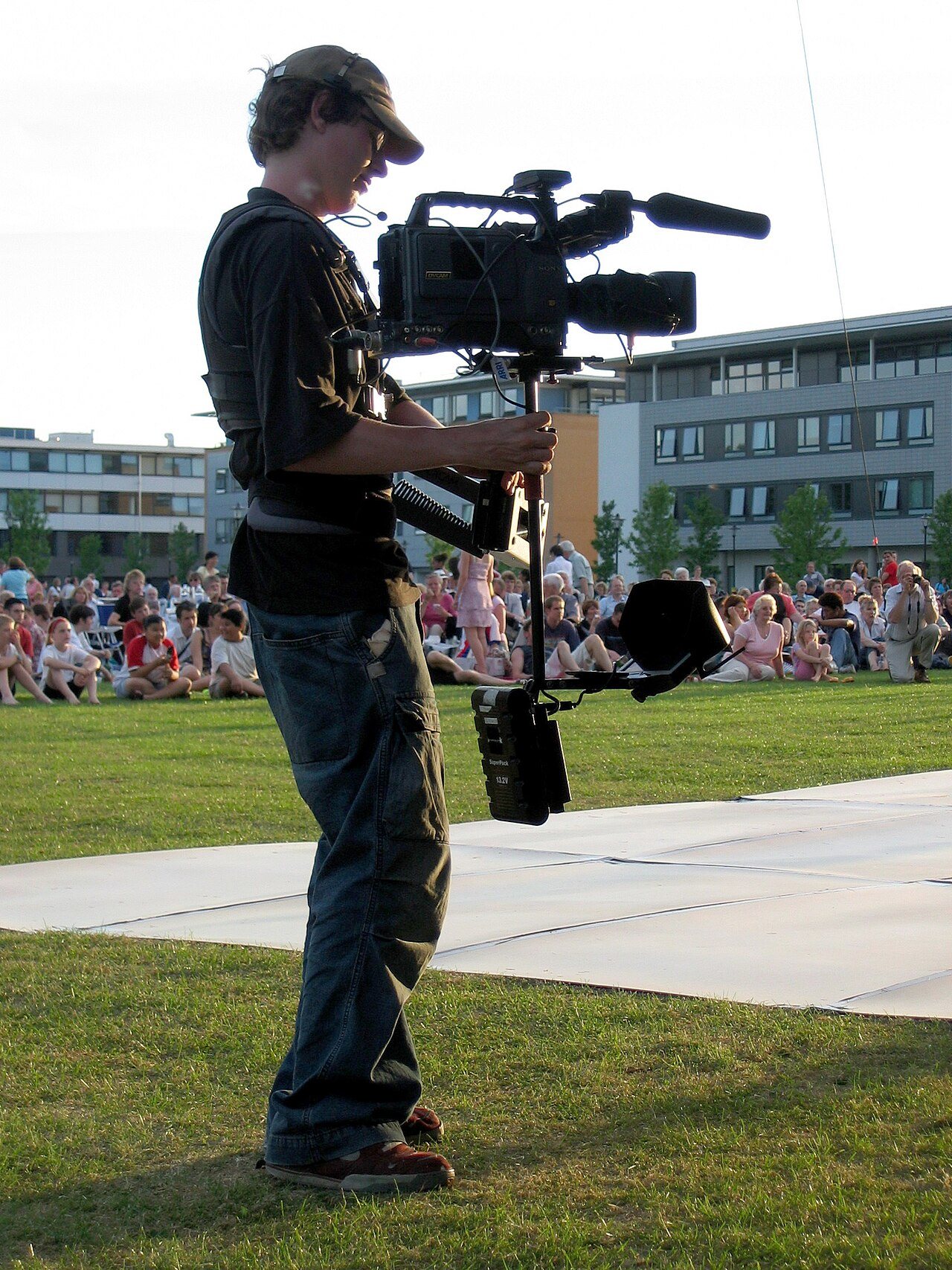 A Steadicam operator at work, in a general photo (not from the film). Photo: Mike1024, via Wikimedia Commons, 2005 — public domain.
A tune in an odd rhythm. Carpenter wrote the score himself, and it is mostly built on a piano melody in an unusual rhythm, usually described as 5/4 (Wikipedia calls it 10/8, or "complex 5/4"). He has said the rhythm came from an exercise his father taught him on bongos at 13. Dan Wyman, a music professor, helped. How quickly it came together depends on who's telling it: accounts range from three days to as little as an hour. Carpenter has also said he scored his films on a synthesizer because he couldn't afford an orchestra, and he credited himself, tongue in cheek, as the "Bowling Green Philharmonic Orchestra". Either way, the story goes that an early cut shown with no music wasn't scary, and with the score it got much scarier.
The template. Horror had been moving this way for a while. Psycho (1960), The Texas Chain Saw Massacre and Black Christmas (both 1974) are all cited as early slashers, and Black Christmas even opens with a killer's-eye shot. But many historians credit Halloween with turning the ingredients into a pattern: a masked, near-unstoppable killer, a group of teenagers, a holiday setting, a theme tune for the villain and a single girl who survives. Scholar Adam Rockoff calls it the blueprint for the slasher.
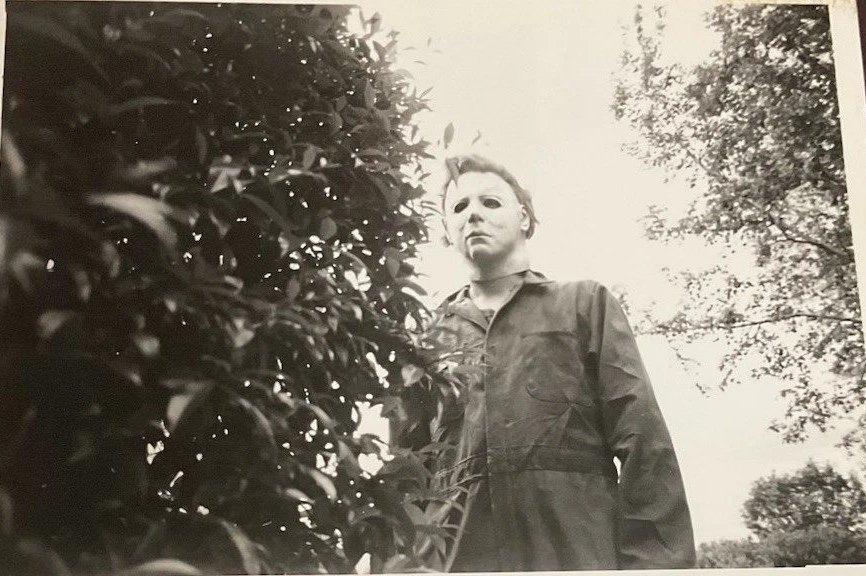 The masked, silent stalker: Michael Myers in a 1978 publicity photo for the film. Photo: unknown, via Wikimedia Commons, 1978 — public domain.
The wave. Studios noticed the profits. Some scholars count more than 100 similar films between 1978 and 1984. Friday the 13th (1980) grossed more than $59.7 million in North America, despite scathing reviews, and A Nightmare on Elm Street (1984) took more than $25.5 million on a $1.8 million budget and helped turn New Line Cinema into a major studio. By the mid-1980s audiences had tired of the formula, and the major studios largely stepped back.
The final girl. The best-known idea about the genre belongs to film scholar Carol J. Clover, who coined the term "final girl" in her 1987 essay "Her Body, Himself: Gender in the Slasher Film", published in the journal Representations, and developed it in her 1992 book Men, Women, and Chain Saws. It describes the lone woman who survives the killer; Laurie Strode, played by Jamie Lee Curtis in her first film, is one of the examples. Other critics push back: some argue her survival owes more to luck than to her own agency, others that the convention is less progressive than it looks.
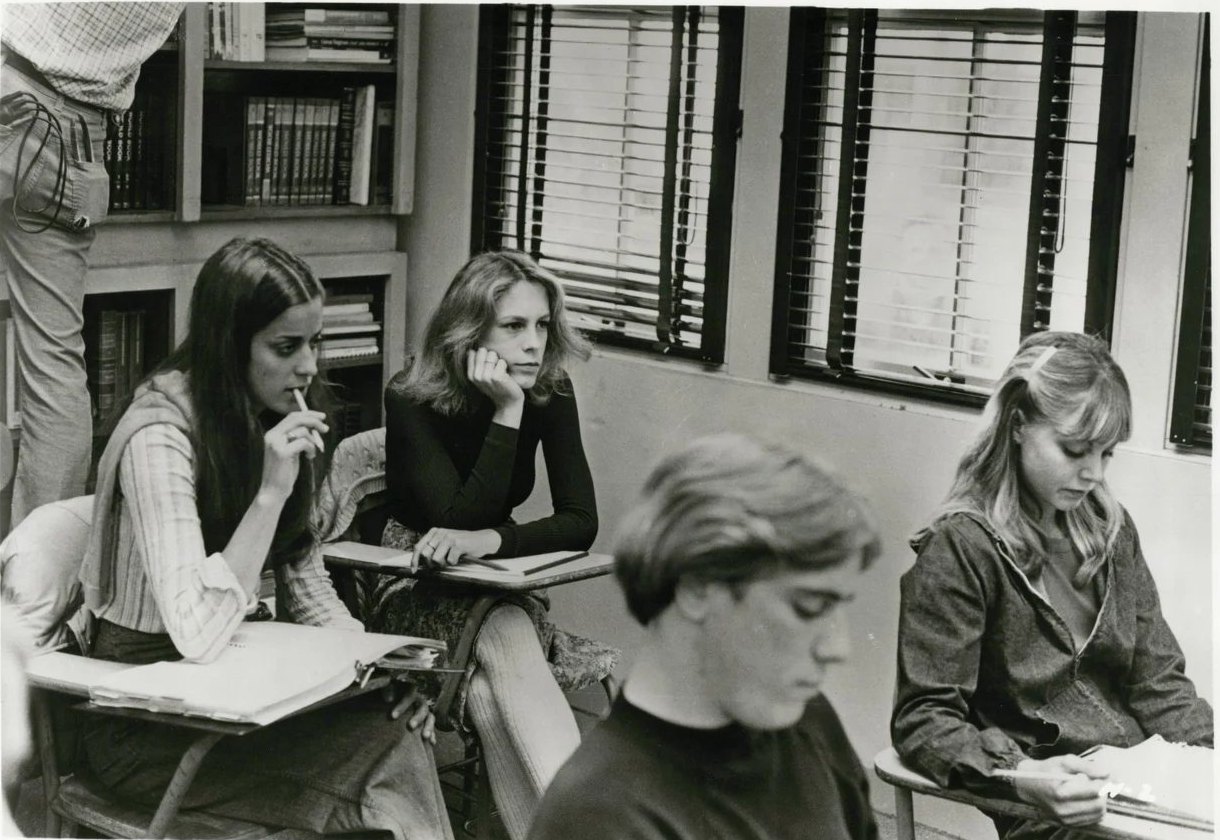 Jamie Lee Curtis, second from left, as Laurie Strode in a 1978 publicity photo. Photo: unknown, via Wikimedia Commons, 1978 — public domain.
Still standing. The Library of Congress chose Halloween for the National Film Registry in 2006, as "culturally, historically, or aesthetically significant". Whether or not you like the descendants, it's hard to watch a stalker thriller today without spotting something Carpenter did first, or at least best.
If you're watching it this Halloween, turn the lights down and listen for that piano.
Sources
- Halloween (1978 film) — Wikipedia
- Final girl — Wikipedia
- Slasher film — Wikipedia
- Halloween (1978): box office and budget — The Numbers
- John Carpenter on composing the Halloween music — PBS American Masters
- Halloween: POV on Horror — American Cinematographer (ASC)