Where Halloween Really Comes From: Samhain, Saints and a Lot of Turnips
Is Halloween an ancient Celtic festival of the dead in a pumpkin costume? Not quite. The real story has a Gaelic harvest feast, a Christian calendar, and a few myths worth retiring.
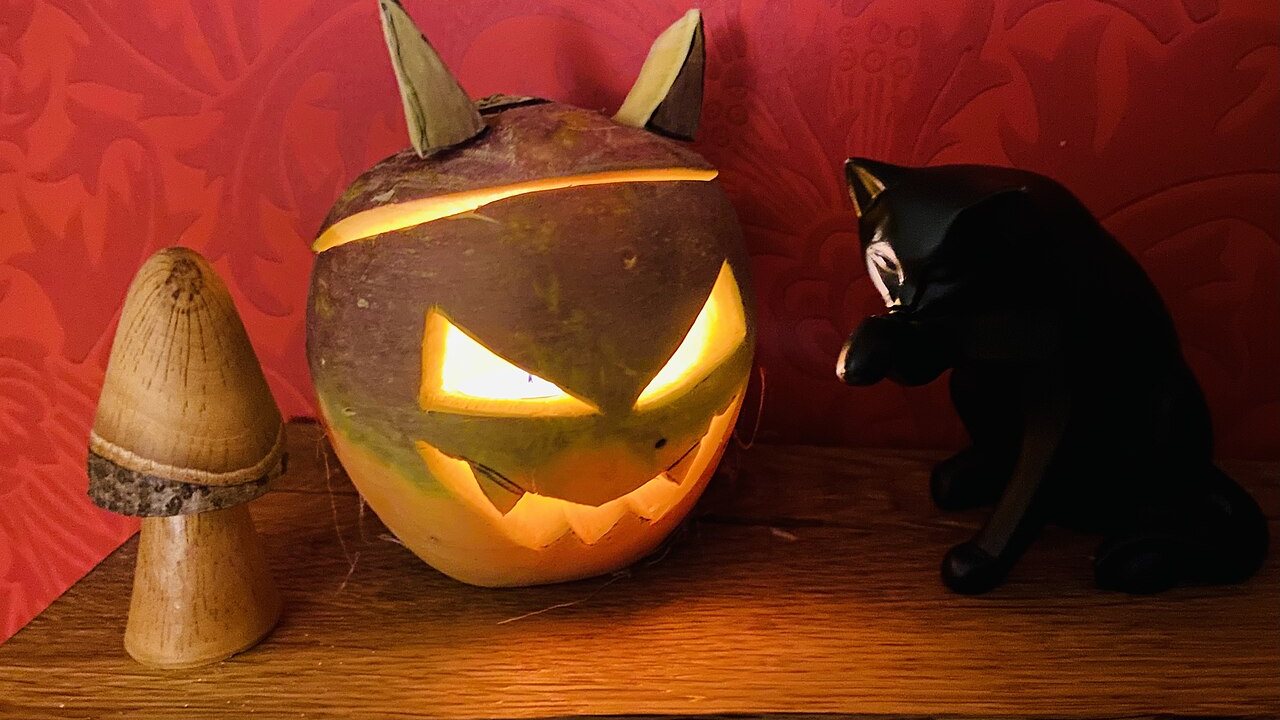
Photo: LornaMCampbell, via Wikimedia Commons, 2022 — CC BY-SA 4.0
Ask around on 31 October and you'll hear the same tale: Halloween is the old Celtic festival of the dead, the Church couldn't stamp it out, so it painted a saint's day on top. It's a good story. It is also much shakier than it sounds. Here is what the record actually shows, and where the neat version goes wrong.
What Samhain was. Samhain (roughly "SOW-in") was a Gaelic festival marking the end of the harvest and the start of the darker half of the year. It began at sunset on 31 October, because the Gaelic day ran from sunset to sunset, and carried on into 1 November. Its name is still the Irish and Scottish Gaelic word for November. We know it from early Irish literature: it appears from the 9th century, and a 10th-century tale lists it as the first of four seasonal festivals. Customs recorded over the centuries include bringing the cattle down from summer pasture, choosing which animals to slaughter, lighting hilltop bonfires for cleansing and protection, leaving offerings for spirits, and divination games with apples and nuts. Medieval stories also place great gatherings at Samhain, including one at the Hill of Ward in County Meath.
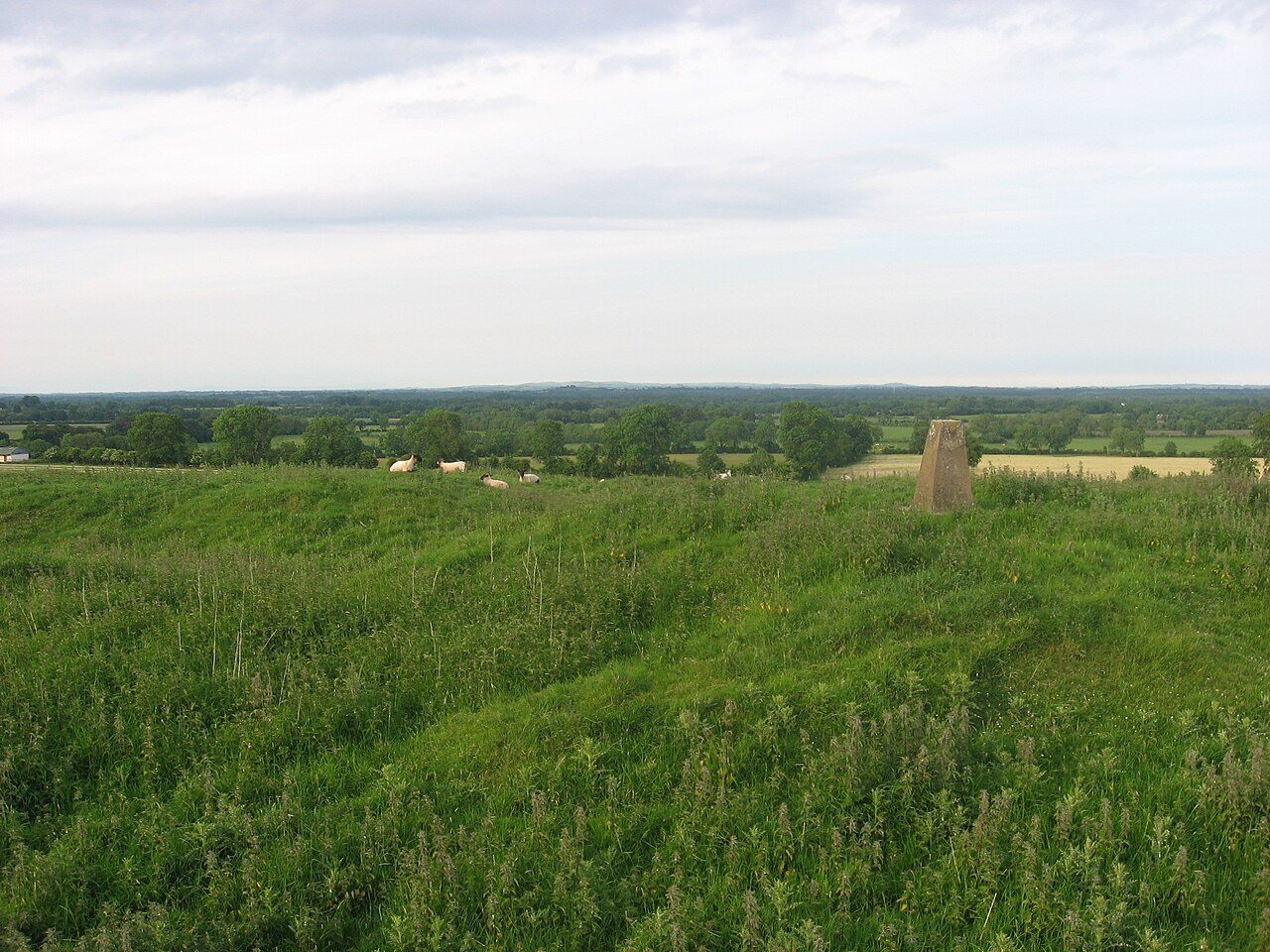 The Hill of Ward (Tlachtga), Athboy, County Meath. Photo: Kieran Campbell, via Geograph and Wikimedia Commons, 2010 — CC BY-SA 2.0.
The Christian calendar. The other half of the family tree is Christian. All Hallows' Day, or All Saints' Day, falls on 1 November, and the evening before it is All Hallows' Eve, which shrank over time into "Hallowe'en" ("hallow" is an old word for holy or saint). All Souls' Day, for remembering the faithful dead, follows on 2 November. Early saints' feasts had been held on other dates, mostly in spring: in 609 or 610 Pope Boniface IV consecrated the Pantheon in Rome to Mary and all martyrs on 13 May. The 1 November date turns up in the Gaelic and Anglo-Saxon worlds first: by about 800, churches in Ireland and Northumbria kept an all-saints feast then, and in 835 Louis the Pious made it a holy day across the Frankish Empire, at the request of Pope Gregory IV.
Turnips and souls. The customs we now think of as Halloween grew up alongside those saints' days. From at least the 15th century, poor people went door to door at Allhallowtide for "soul cakes" in return for prayers for the dead, which is the leading suggestion for where trick-or-treating began. Guising, going house to house in costume for food, is recorded in Ireland, Scotland, the Isle of Man and Wales from at least the 16th century. And the first jack-o'-lanterns weren't pumpkins: in 19th-century Ireland and the Scottish Highlands they were hollowed-out turnips and mangel-wurzels, still called "tumshie" lanterns in Scotland.
Across the Atlantic. Halloween was not a big deal in early America. Puritans in New England opposed it, and late 18th- and early 19th-century almanacs show no sign that it was widely kept. What changed things was migration: Irish and Scottish immigrants in the 19th century carried their customs with them, and by the early 20th century Halloween was celebrated across the country. Pumpkins, bigger and softer than turnips, took over the carving; American pumpkin carving is recorded by 1837. The words "trick or treat" show up in print in Canada in 1917 and the habit only became widespread in the 1930s. Wartime sugar rationing, from 1942 to 1947, stalled it, and by the early 1950s it was firmly part of popular culture.
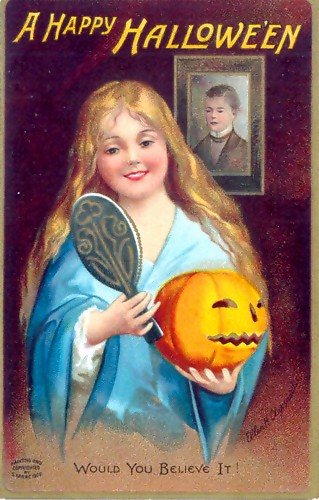 A Hallowe'en divination card by Ellen Clapsaddle, 1904. Public domain.
Myth check.
"Halloween is just Samhain, the Celtic festival of the dead." The historian Ronald Hutton argues that the earliest sources show Samhain as a harvest festival with no clear link to the dead, though it was a time to guard against supernatural forces. The classic picture of a pan-Celtic feast of the dead rests largely on 19th- and early 20th-century scholarship, notably James Frazer's, which Frazer himself admitted was inconclusive. Some historians think Samhain's influence on Halloween has even been exaggerated, and that Halloween began as a Christian vigil whose customs developed with All Saints' and All Souls'.
"Samhain was the Celtic New Year." This idea comes from the late 19th century (John Rhys, popularised by Frazer). Hutton calls the evidence flimsy.
"Pope Gregory III moved All Saints to 1 November to wipe out Samhain." It's a popular line, but the sources don't agree: some say Gregory III dedicated a chapel to all saints at St Peter's on 1 November in the 730s, others give 12 April 732, and the November feast was already being kept in Ireland and Northumbria around 800 and was spread across the Frankish Empire by 835. Historians have proposed several reasons for the date, including Celtic or Germanic winter traditions, but nobody can say for sure.
"Trick-or-treating was invented to stop vandalism." Some histories say adults dreamed it up to tame Mischief Night pranks. There are few records to support that, and only Des Moines, Iowa is recorded as using it that way.
So Halloween is neither a fossil pagan rite nor a purely Christian invention. It is a layered thing: a Gaelic autumn festival, a medieval saints' calendar, centuries of guising and soul cakes, and an American party built by immigrants. That's less tidy than "ancient Celtic ritual", but it is better, and the turnips are real.
Sources
- Halloween — Wikipedia
- Samhain — Wikipedia
- All Saints' Day — Wikipedia
- Trick-or-treating — Wikipedia
- History of Halloween — History.com
- The Stations of the Sun: A History of the Ritual Year in Britain — Ronald Hutton, Oxford University Press, 1996 (Internet Archive listing)