Spotlight: Seven Samurai (1954)
Akira Kurosawa's three-and-a-half-hour epic became the template for basically every "team assembles for one last job" movie made since.
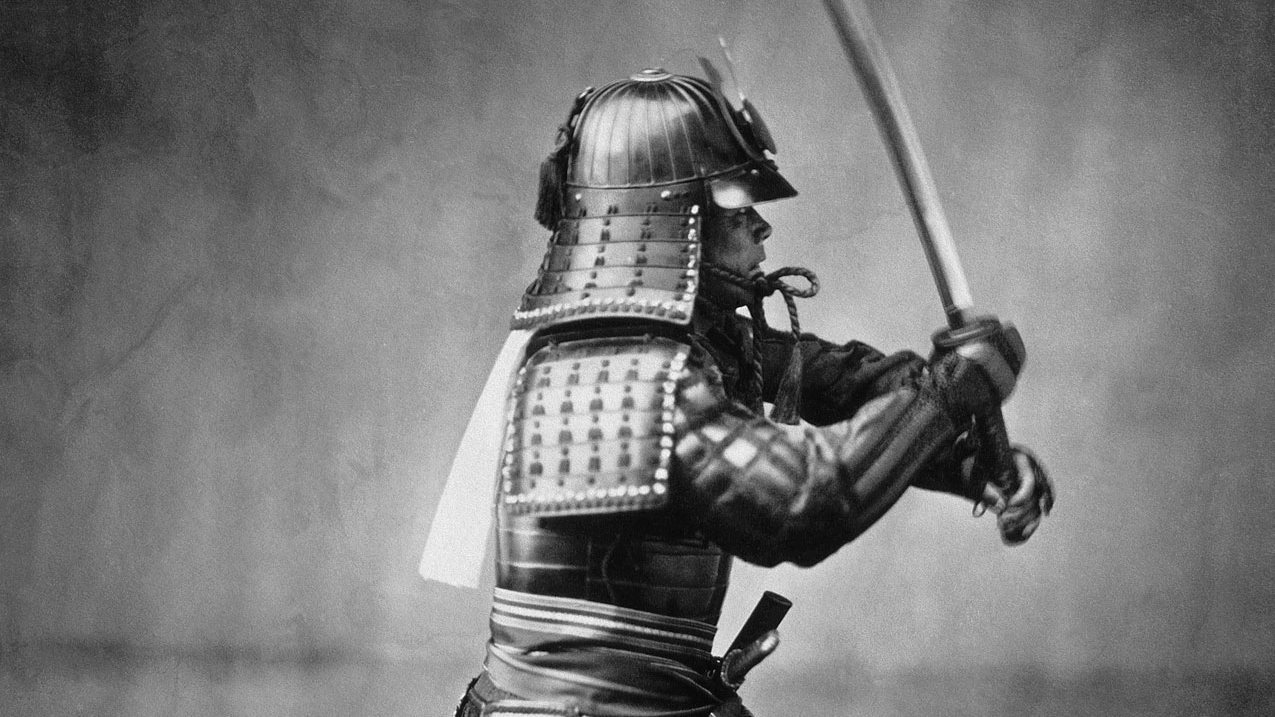
Photo: Felice Beato, c. 1860 — public domain
A farming village, threatened by bandits every harvest, hires seven ronin to defend it for nothing more than food and shelter. That's the entire premise of Akira Kurosawa's Seven Samurai — and from it he built a three-and-a-half-hour film that still moves like something half its length.
The film opened in Japan on April 26, 1954, at 207 minutes, then the longest Japanese film ever made. It was recut to 160 minutes for general release and trimmed to 141 for the United States in 1956. Kurosawa wrote it with Shinobu Hashimoto and Hideo Oguni, who spent more than six weeks on the script.
It was also a punishing production. Filming began on May 27, 1953 and took 148 working days at locations in Shizuoka and Kanagawa prefectures. At ¥210 million it was the most expensive Japanese film made up to that point, and by September 1953 the money had nearly run out.
Kurosawa spent months on casting and rehearsal before shooting a single frame, and it shows in how distinct each of the seven feels — the calm strategist played by Takashi Shimura, Toshiro Mifune's wild, reckless pretender Kikuchiyo, the exhausted veteran who's clearly done this exact job too many times already. The final battle, shot in driving rain that the crew fought to keep consistent across days of filming, is still taught in film schools as a masterclass in geography: you always know exactly where everyone is and why it matters. Part of the secret was technical: Kurosawa shot with several cameras at once and used telephoto lenses, a setup that influenced generations of filmmakers.
Its influence is hard to overstate. John Sturges remade it almost beat for beat in 1960 as the western The Magnificent Seven. A Bug's Life, Galaxy Quest, and countless heist films all run the same basic structure: a threatened group, a team assembled from outsiders, a fight that costs more than anyone expected to pay.
The film won the Silver Lion at the 1954 Venice Film Festival and earned two Oscar nominations, though no win. Critics have kept faith with it: it placed third in Sight & Sound's 1982 poll, and in 2018 it topped a BBC critics' vote for the best foreign-language film.
Watch it if: you've ever enjoyed a "gather the crew" movie and want to see where the whole idea got its footing.