Spotlight: Metropolis (1927)
Every dystopian sci-fi skyline owes something to a German silent film that was nearly lost forever.
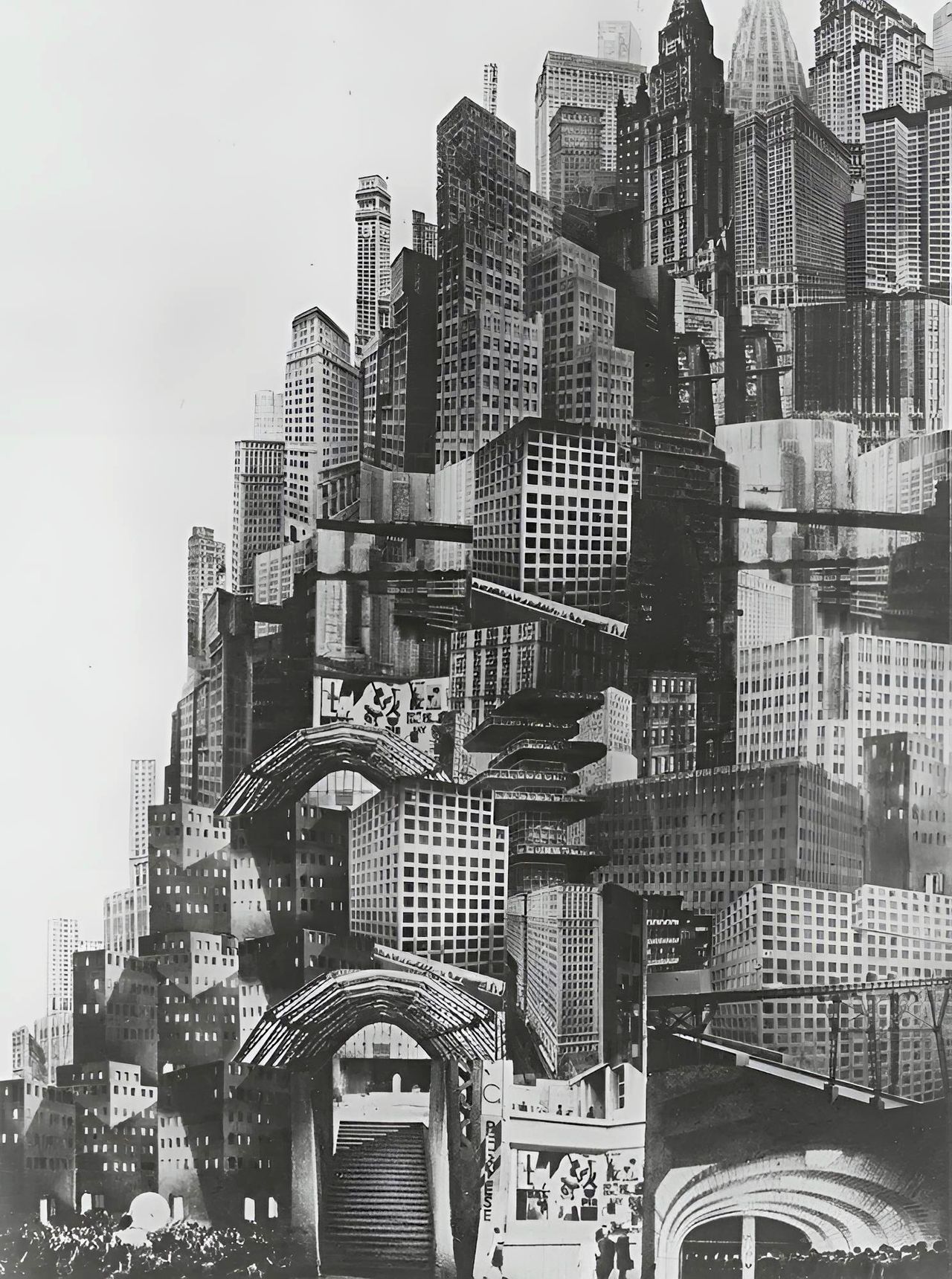
Poster: Boris Bilinski, 1927 — public domain
Fritz Lang's Metropolis is the reason a certain kind of sci-fi city — towering spires, an underclass laboring beneath a gleaming upper world, a robot double of the heroine — looks the way it does. It's widely considered one of the first feature-length science fiction films, and the most influential. At the time it was the most expensive movie ever made, nearly bankrupting the German studio UFA.
Lang said the idea came to him on a visit to New York in October 1924, looking at the lights and the tall buildings. The film premiered at Berlin's UFA-Palast am Zoo on 10 January 1927, at 153 minutes. Making it had taken 17 months, 310 shooting days and 60 shooting nights, and the budget swelled from 1.5 million Reichsmarks to 5.3 million.
The plot, about a city split between wealthy planners above ground and the workers who keep the machines running below, is broad and a little melodramatic — its own screenwriter, Thea von Harbou, once summarized its message as "the mediator between head and hands must be the heart." H.G. Wells called it "quite the silliest film." But the imagery has outlasted the story: the Maschinenmensch robot, the vertical cityscape, the workers marching in lockstep. You can trace a straight line from Metropolis through Blade Runner, Star Wars, and basically every cyberpunk skyline since.
The robot was a physical object. The sculptor Walter Schulze-Mittendorff built the costume from "plastic wood" shaped around a cast of actress Brigitte Helm's body, and its rigid shell left her with cuts and bruises. The effects expert Eugen Schüfftan pioneered a process in which mirrors make actors appear to stand inside miniature sets; Hitchcock used the same trick in Blackmail two years later.
For most of the 20th century, the film only survived in badly cut versions — about 40 minutes of footage was trimmed for its original international release and thought lost for good. In 1984 Giorgio Moroder released an 80-minute version with a pop soundtrack. Then in 2008, a 16mm copy turned up at the Museo del Cine in Buenos Aires, holding about 25 minutes of the lost footage. Combined with other surviving material, including a print from New Zealand, it made possible a restored version that premiered in Berlin and Frankfurt on 12 February 2010, at 148 minutes. In 2001 UNESCO had already made Metropolis the first film on its Memory of the World register.
It's in the public domain in the US today — no rights, no paywall, just one of the most influential images in science fiction, free to watch.